When it comes to aluminum siding, whether interiors or exteriors, the details matter. When detailed correctly, trims and edge profiles might not be the first thing that catches the eye on a completed building, but they play a critical role in the aesthetics, and overall quality of a cladding system. One product that has made it to the toolkit of general contractors and installers alike is the non-tempered trim, a bendable profile that solves some of the trickiest challenges.
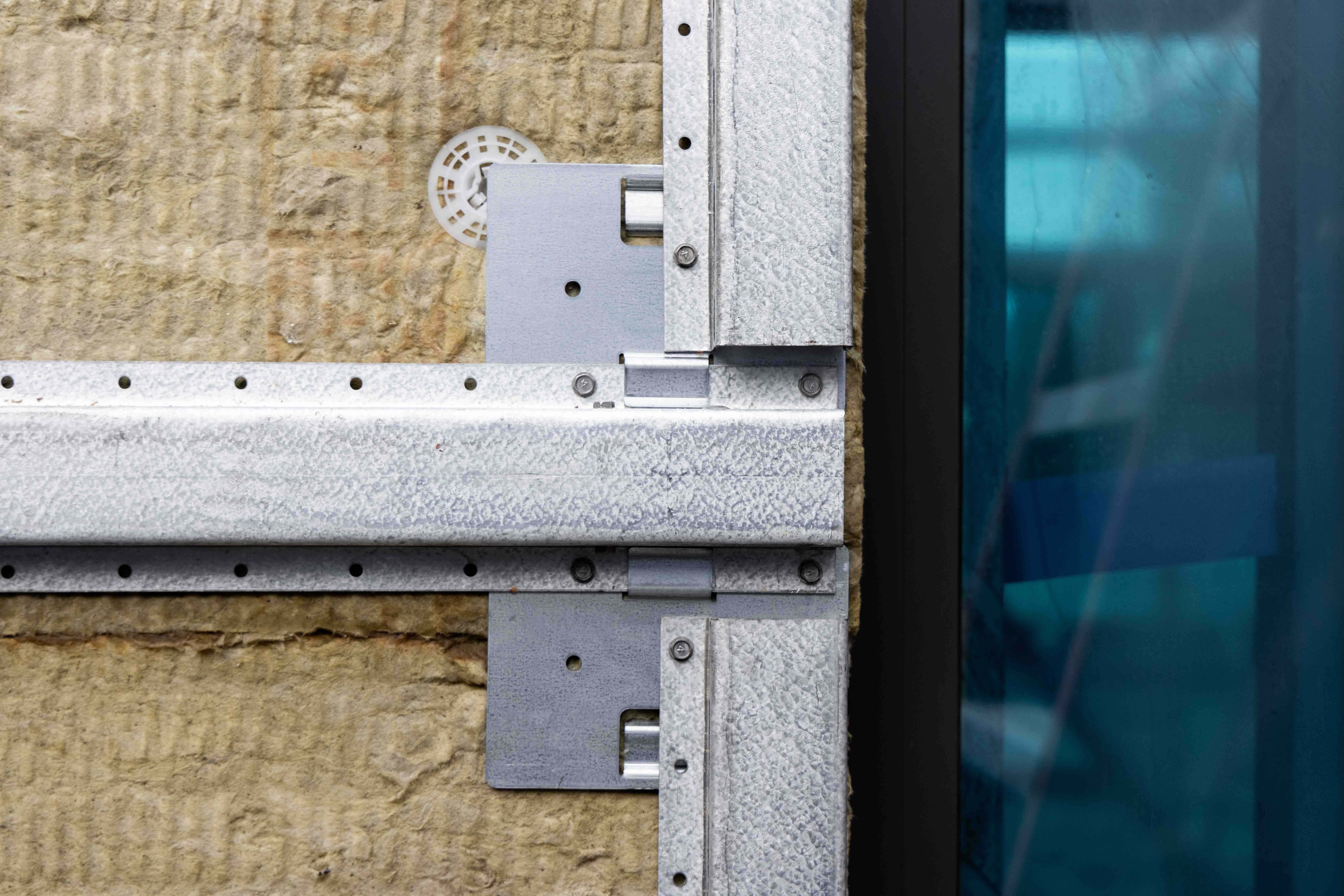
Non-tempered trims are profiles that haven’t been hardened through heat treatment. Unlike their tempered counterparts, they retain a natural softness and malleability that allows these trims to be bent, curved, and shaped without losing their structure. Non-tempered trims act as bridges to gaps between cladding planks and curved forms that contemporary architecture increasingly demands. The flexibility aids them to act as perimeters to curves, and irregular structures. The non-tempered trims provide a clean, finished appearance that would typically only be achieved by chopping up a tempered trim, saving installers time and resources on site. Non-tempered trims shine in two of the below scenarios, wrapping structural columns in exterior applications, and finishing curved ceilings indoors. Both use cases come to life clearly in two recent projects.
Opsal Apartments
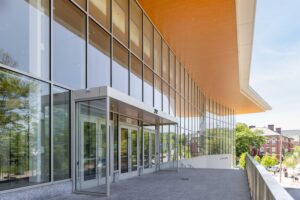
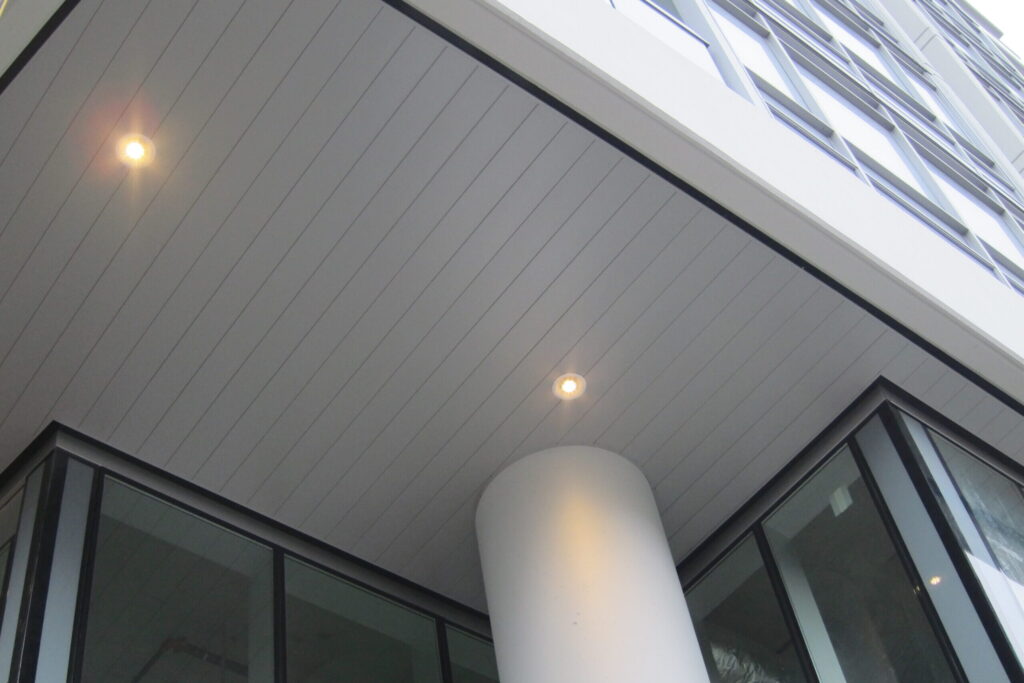
At the Opsal Apartments in British Columbia, designed by IBI/HB Architects, cylindrical structural columns rise directly through a Tongue & Groove 6″ V Groove soffit plane finished in a custom color. Non-tempered trims provided the flexibility to wrap each column cleanly, ensuring a consistent, gap-free finish across the entire exterior facade. Leaving a crisp, contemporary result where every transition feels considered.
Galen College of Nursing
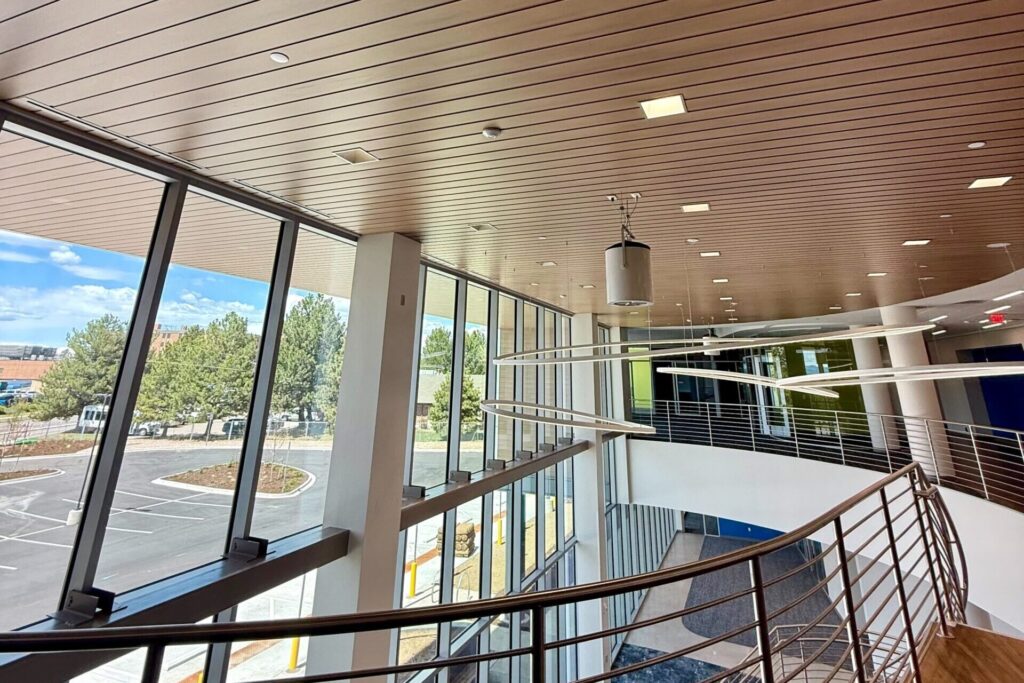
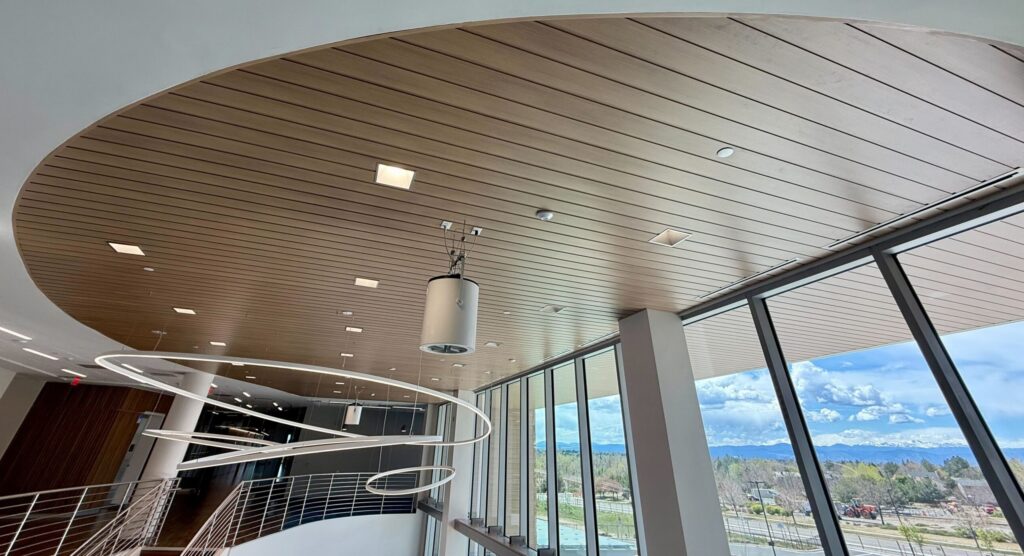
At the Galen College of Nursing in Colorado, the challenge was indoors. A sweeping elliptical ceiling clad in Tongue & Groove 6″ Channel planks with a warm Rock Elm finish anchors the building’s main interior space. Finishing the perimeter of that ellipse, where the wood-toned planks terminate against the surrounding white ceiling, required a trim that could follow the continuous curve without a single interruption. Non-tempered trims bent smoothly along the full arc, delivering a clean, unbroken edge that gives the space a calm and polished quality.
Together, these projects illustrate exactly what non-tempered trims bring to the table. By trading rigidity for malleability, they make possible the kind of refined, curved detailing that modern architecture demands. For any project where the geometry curves, non-tempered trims deserve a place in the specification from day one.