Natural wood is inconsistent, no two boards from the same tree share an identical grain pattern, and it is that variation that makes wooden-clad walls realistic. Replicating it in an aluminum panel requires a method of distributing the finish across the wall in a way that reflects the randomness of the natural material.
Longboard woodgrain planks are manufactured with that in mind. Every box contains two distinct planks, designated A and B, each carrying the same finish but a different grain pattern. A and B planks’ grain lines follow different trajectories and have knots in different positions. By scattering A and B profiles across the surface instead of stacking them, the system creates the variation required for an installation to appear as authentic timber rather than a repeating pattern.
Pattern stacking occurs when planks are installed in the sequence they come out of the box, causing the same plank face to repeat at a regular interval up the wall. On finishes with subtle grain variation, the effect is minor. On finishes like Light Cherry, where a strong knot feature defines the character of the plank, that feature repeats across rows. The repetition is obviously visible and the timber effect that was initially sought after is no longer present.
The objective is not a strict alternating A-B sequence, but a mixed sequence that replicates the randomness of natural wood. Brief repetitions may occasionally occur without consequence, but prolonged runs of the same face are what read as a pattern rather than wood. The goal is a surface where grain variation appears entirely organic, with no discernible repetition.
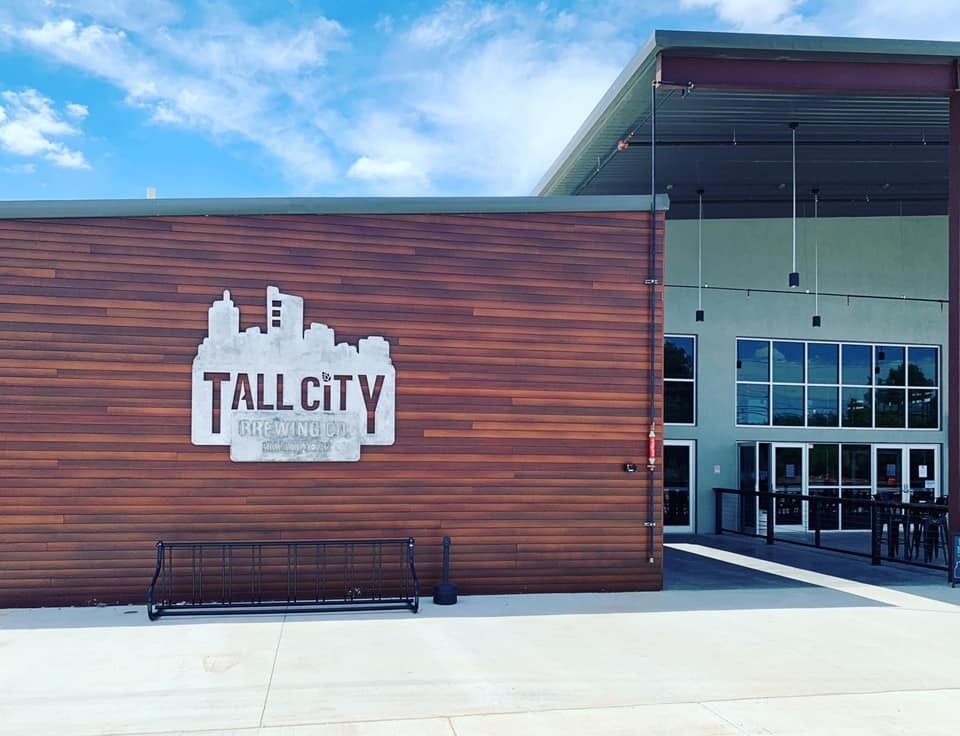
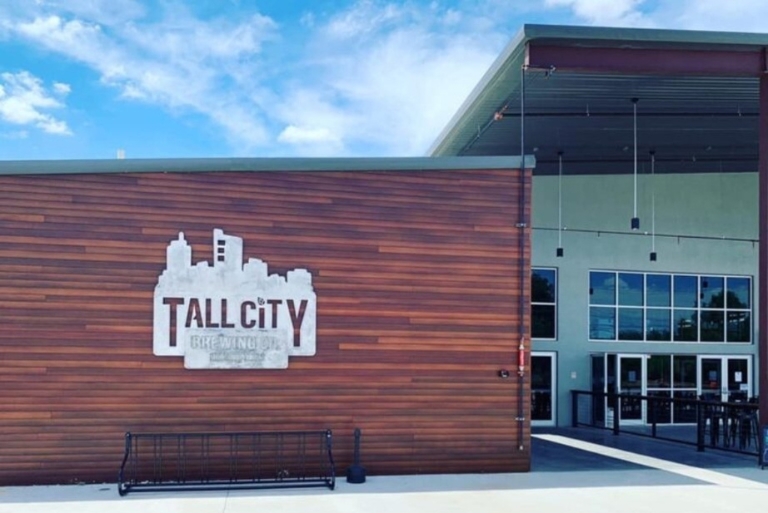
Tall City Brewing Company – Table Walnut woodgrain
Midland, Texas
Tall City Brewing Company in Midland, Texas demonstrates what this system achieves at its best. The brewery’s exterior feature wall is clad entirely in Longboard’s Table Walnut finish, a deep, warm-toned woodgrain with pronounced grain movement and rich variation between dark and mid-range tones. There are no mixed finishes at play. The visual complexity that reads across the facade comes entirely from the A/B distribution and one deliberate specification decision.
That choice of profile width is doing the work of natural wood. Narrower planks increase the number of horizontal courses across a given wall height, which multiplies the number of grain transitions visible at once. Where a wider plank might show eight or ten distinct faces across the same elevation, a 4″ profile might show twenty or more.
Each of those courses carries its own grain trajectory, its own tonal variation, its own knot placement, and when A and B faces are distributed thoughtfully across that density of horizontal lines, the result is a surface with the visual layering and depth that real timber produces. The eye moves across the wall without finding a repeat, which is precisely what makes an observer read the material as wood rather than cladding.
The installation at Tall City also benefits from the character of Table Walnut itself. The finish carries enough contrast between its lighter sapwood tones and darker heartwood passages that the grain movement is legible even at a distance. On a finish with less inherent contrast, the effect of a well-distributed A/B sequence is still present but subtler. On a finish like Table Walnut, it is the dominant visual quality of the facade. The brewery’s prominent signage wall, which faces the street and anchors the building’s identity, relies entirely on that surface quality to carry the architectural character of the exterior.
Even with a well-blended sequence, focal points like knots may occasionally align across rows, creating an unintentional vertical column of repeated features. This is corrected through strategic plank selection and calculated cuts. Varying the starting position of a row or trimming a profile shifts a distinctive grain feature out of alignment and disperses it across the surface.
Laying planks on the ground before fastening gives a clear view of grain distribution across several rows at once. Adjustments at that stage are straightforward, and building that assessment into the install sequence is what keeps the process efficient and the result consistent.
The A/B profile system was developed to produce aluminum surfaces that mirror the appearance of natural wood. Strategic placement of the two faces across an installation is what makes that outcome possible.
Read more about the A/B Patterns