Every building envelope faces the same fundamental challenge. Keeping the exterior climate from penetrating the interior conditions. For buildings in extreme climates, or those housing irreplaceable objects, that challenge demands more than conventional enveloping methods can deliver. Longboard’s Hitch™ Thermal Cladding Attachment System was engineered to close that gap, to structure cladding while interrupting the path heat and cold travel through a building’s walls.
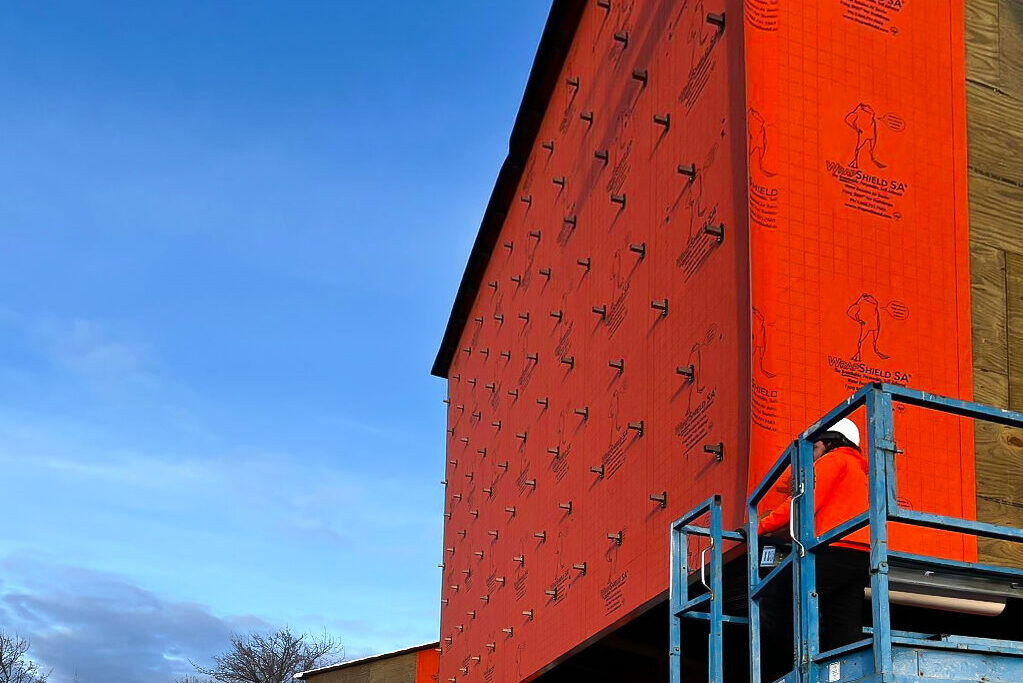
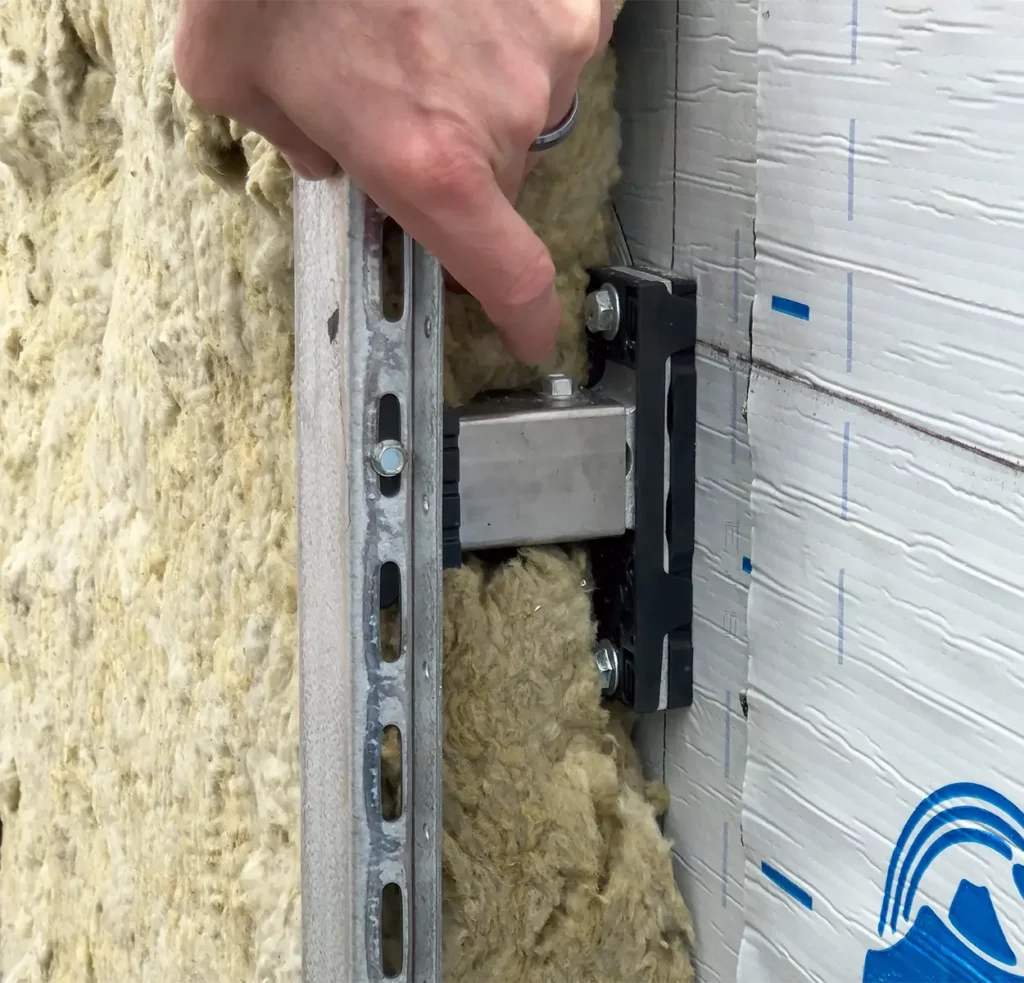
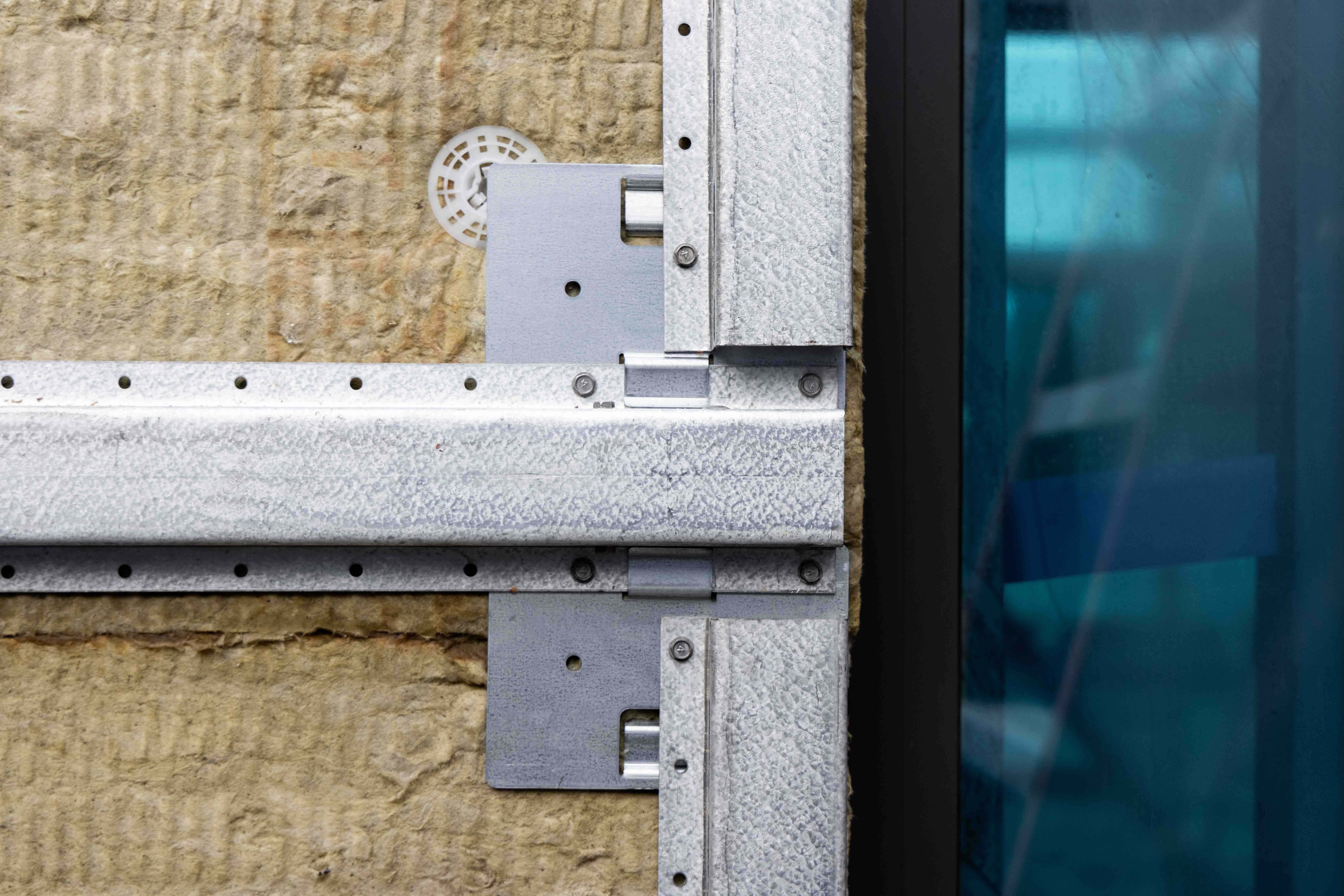
The Hitch system was created with a two-part thermally broken design to bridge the gap between exterior sheathing and cladding girts. By integrating premium thermal breaks and stainless steel tubes, the assembly effectively halts heat transfer at every connection point. The result is a back-ventilated rain screen system that achieves a remarkable 94% thermal efficiency, maintaining a nearly continuous insulation layer with minimal structural interruptions.
While conventional cladding attachment methods rely on multiple fixtures that penetrate the building envelope, the Hitch system allows for wider spans that require 50% fewer clips. This decrease in components simultaneously boosts thermal performance by minimizing the number of penetrations through the wall. Beyond thermal excellence, this efficiency significantly decreases installation time and cuts labor costs. Even with fewer attachment points, the assembly remains structurally efficient, built to support cladding weights up to 15 psf and withstand a 120 psf wind load.
The Montana Museum of Art and Culture in Missoula is one example of what can be possible with Hitch. Scott Gilder, a Missoula native, led the team of architects at A&E Design to create the permanent home for an art collection spanning centuries. And, with the inclusion of a robust thermal enveloping system like Hitch, the collection finally has a building made to protect it for generations to come.
“The climate here in Missoula is characterized by cold winters and hot summers and everything in between,” Gilder explains. For a museum housing irreplaceable art, those seasonal extremes are an important issue that needs solving in advance. Temperature swings and humidity fluctuation had to be controlled precisely, making thermal performance one of the most critical pieces of the entire design.
“This building utilizes the Hitch system, which is a cladding attachment system,” says Gilder. “It’s what the Tongue and Groove and the Link and Lock fasten to, and it provides a highly efficient thermal wall assembly.” The facade features a curving second level wrapped in Link and Lock battens. These are fastened to Tongue and Groove cladding, a combination. The entire assembly runs on Hitch from end to end. “The cold weather on the exterior does not then transfer to the sheathing of the building,” Gilder adds.
That performance is what carried the MMAC to LEED Gold certification. “It was critical in our design to be able to maintain the interior climate to be relatively consistent year-round,” Gilder says. The facade running on Hitch enabled a back-ventilated rainscreen system with continuous insulation, the high-performing envelope that keeps Montana’s seasons on the outside and interior conditions stable within.
“The museum design is intended to be a work of art itself,” Gilder says, “both on the interior and the exterior.” The thermal assembly holding the exterior cladding in place is invisible to visitors. Yet it is doing the quiet, essential work of making sure the building, and the art itself, lasts for decades to come.
The Hitch cladding attachment system was engineered for architectural visions where compromise is not an option. Whether the objective is LEED-certified efficiency, resilience against environmental extremes, or longevity, Hitch provides the essential structural and thermal foundation to turn those demands into reality.