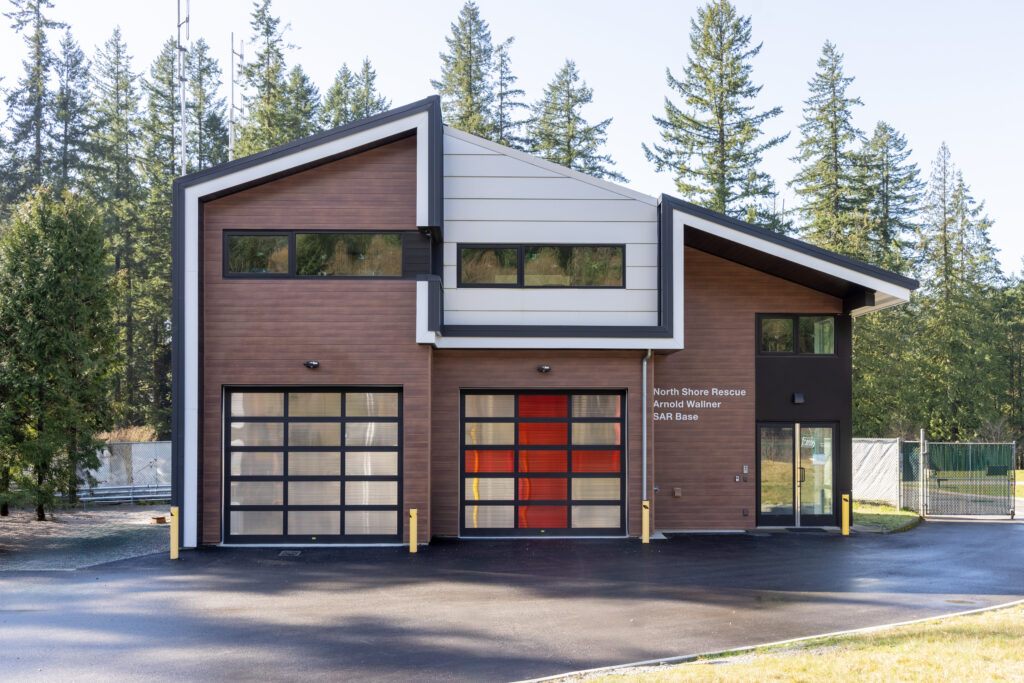
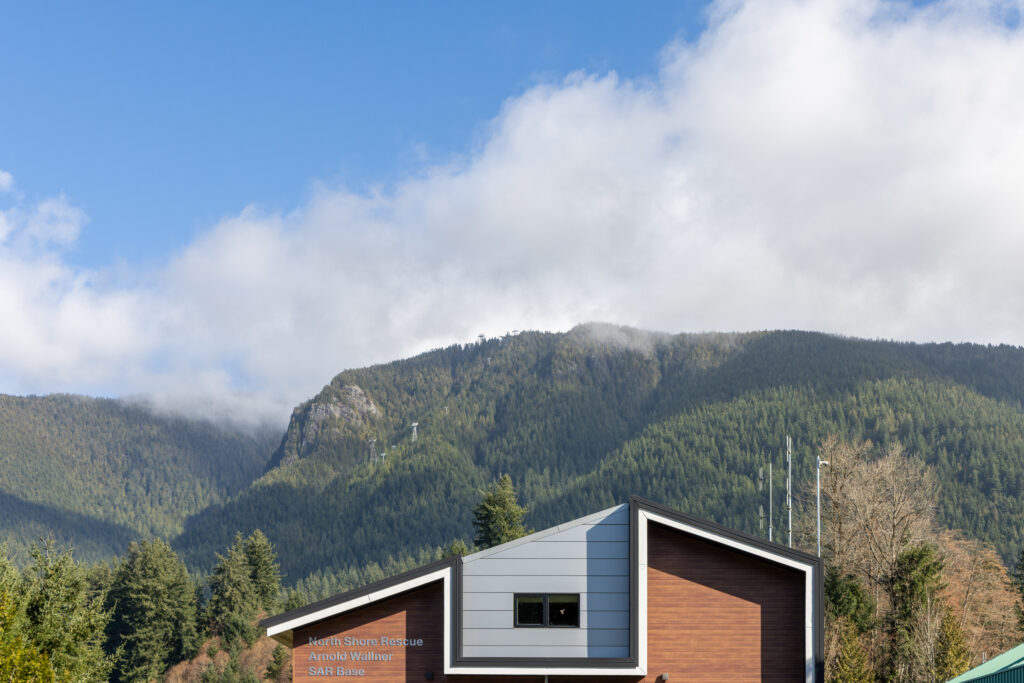
Beneath a canopy of trees, snow-covered mountain peaks, and Capilano’s watershed in North Vancouver is where North Shore Rescue sits. One of 78 search and rescue centers across British Columbia, with over 50 hard-working volunteers who each donate hundreds of hours every year to search and rescue subjects in need.
The organization was founded over 60 years ago and has gone through many impermanent solutions to an operations center. The need for something safe, durable, and able to facilitate the volunteer’s needs was a necessity at this point in time.
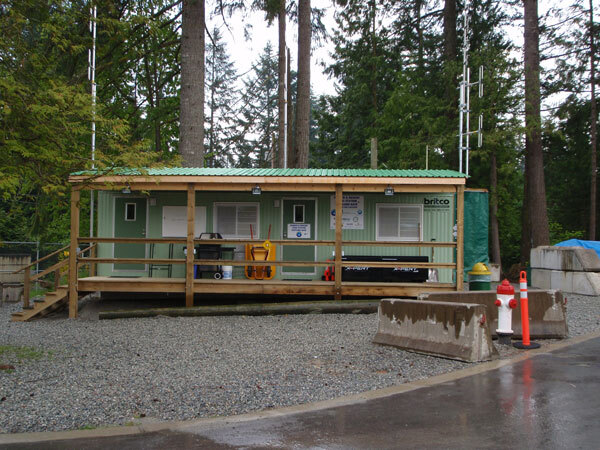
“We offer search and rescue services for any of the outdoor recreationalists on the North Shore Mountains,” explains Allan McMordie, Search Manager of the North Shore Rescue. Allan has over 46 years of experience at this facility. When reflecting on his experience with the previous structures and how he feels about the upgraded center, he says, “It was difficult in the old seacan where you only had one room. A lot of the team members would come in after their search to let you know what they did, or at the beginning of the search to let us know they’re available, and there’s a lot of noise, a lot of commotion. There are people getting gear out of the shelves, and you’re trying to communicate on the radios to people out in the field. By separating those things, we have a dedicated command area with the radios, and then we have this area where all of the gear is and where people can collect and talk about the search, get their teams together, check gear, without having to interfere with what’s happening in the command centre.”
“What they do is phenomenal, and it’s changing. They have the latest helicopter technology, the hoist technology now. They’re changing, they’re constantly adapting, very much changing the way they respond. The building needed to respond to that as well; the building needed to be progressive as well. It needed to be forward thinking.” says Nick Bray, owner and architect at Nick Bray Architecture in Vancouver. Throughout the design process, modernizing North Shore Rescue remained a top priority, ensuring the facility reflects the innovation and dedication behind important operations.
It was important during the design process to listen to many of the long-time volunteers as they have had to handle highly intense situations while operating in less than ideal spaces. Nick wanted to ensure their needs were met with a functional design that connects all of the high-importance areas. “I guess the first step in any building like this is to listen to the different team members involved in the project to understand how operations work. That was a fun part for us because it was a new experience, new learning for our team to really understand what this space was going to be for and how the operations would work in case of a rescue.”
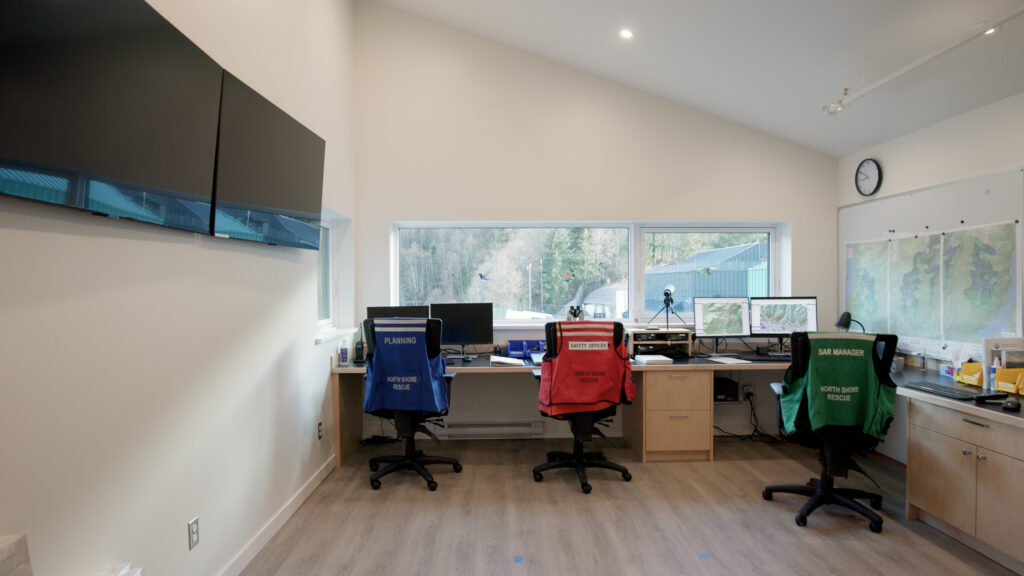
The way the building is situated was important to the volunteers, because of the nature of what they do, they needed to be able to plan their rescue with a direct line of sight. “The command center overlooks the mountains. When you’re sitting down at that desk, you can see the mountains, the weather, and the approach to the helipad as well. That was so important, that orientation and those sightlines are key. The operation bays are situated in relation to the vehicular access and also the helipad itself. It’s designed so you can basically run straight out these doors to the helipad that’s right there,” says Nick.
Beyond the needs of operation at North Shore Rescue were the beautiful natural elements that Nick felt needed to be merged with the design. “We’re right next to Cleveland Park, which is a hugely popular and highly visited park. It was important for us to have something that fit into that landscape. Longboard’s aluminum cladding with the wood aesthetic really responds to the nature, the environment that the building is in, so when the vegetation grows up around it, it will sit really nicely in there and will be really quite subtle,” explains Nick. “Being respectful to its environment was key. Another thing we did in terms of the form of the building; it steps down towards the water, so its high point is away from the water, and the roofline slopes down. Again, that’s kind of mirroring the mountains themselves, mirroring the treeline and also being respectful to the water.”
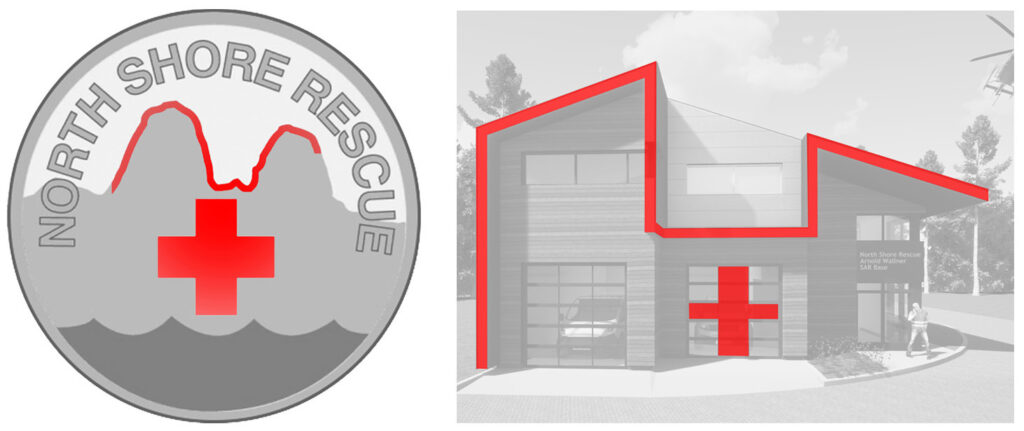
When asked about the theme of the design and the other smaller, yet powerful details, Nick expressed his desire to nod to the organization’s logo, and he did so in a subtle way. “What we saw initially in the North Shore Rescue logo, which has The Lions (or Twin Sisters) Mountains, a distinct backdrop to the Vancouver skyline, and the cross below that. We wanted to echo that and respond to that in a way as well, so what we’ve got on this building is a thin white flashing line with that similar silhouette to the Lions. It’s supposed to echo the white snow caps,” says Nick. “We also included the cross in the doors, as you can see in the middle and then the different colored cladding that responds to that environment as well.”
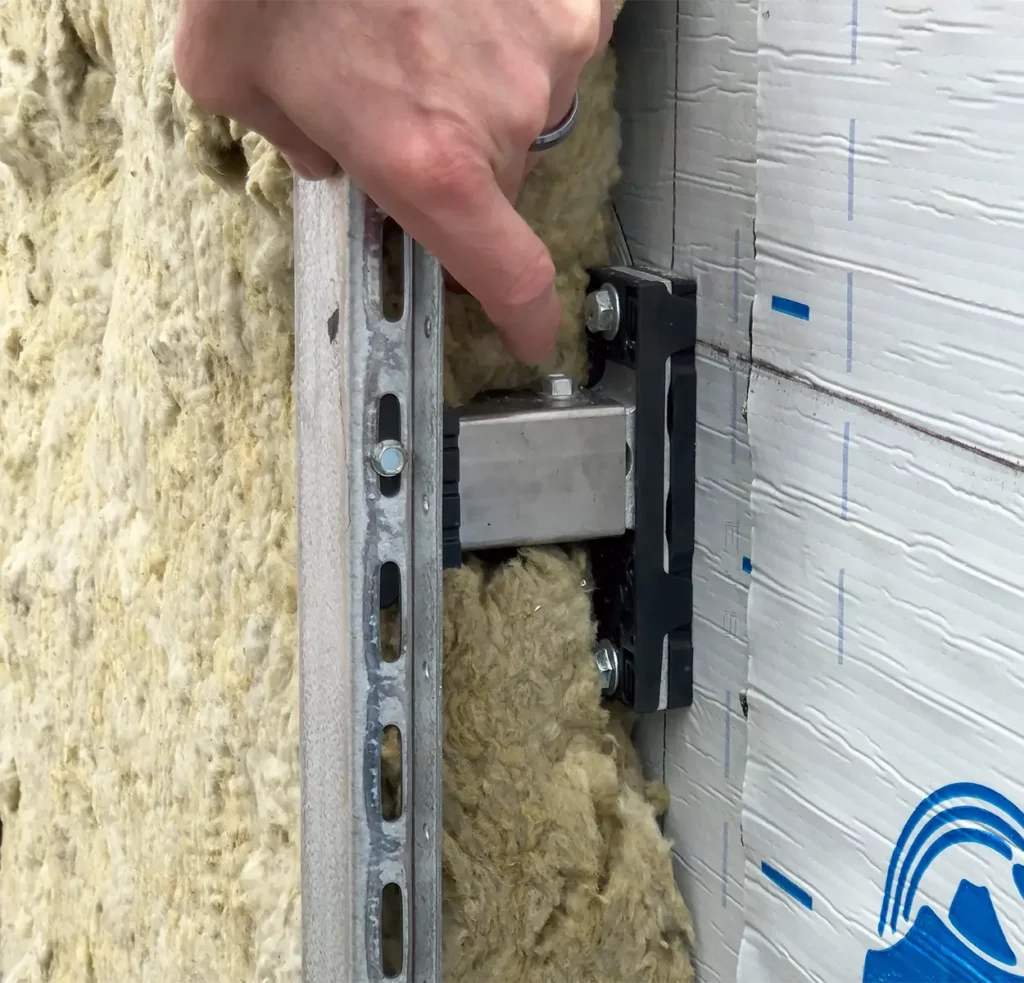
The group’s foundation at North Shore Rescue was strong, so they needed a structure to do the same. “We couldn’t do natural wood, it wouldn’t have the longevity, also we’re in a zone here where we have to be really careful about wildfires – the combustibility was also a big factor [in selecting Longboard].”
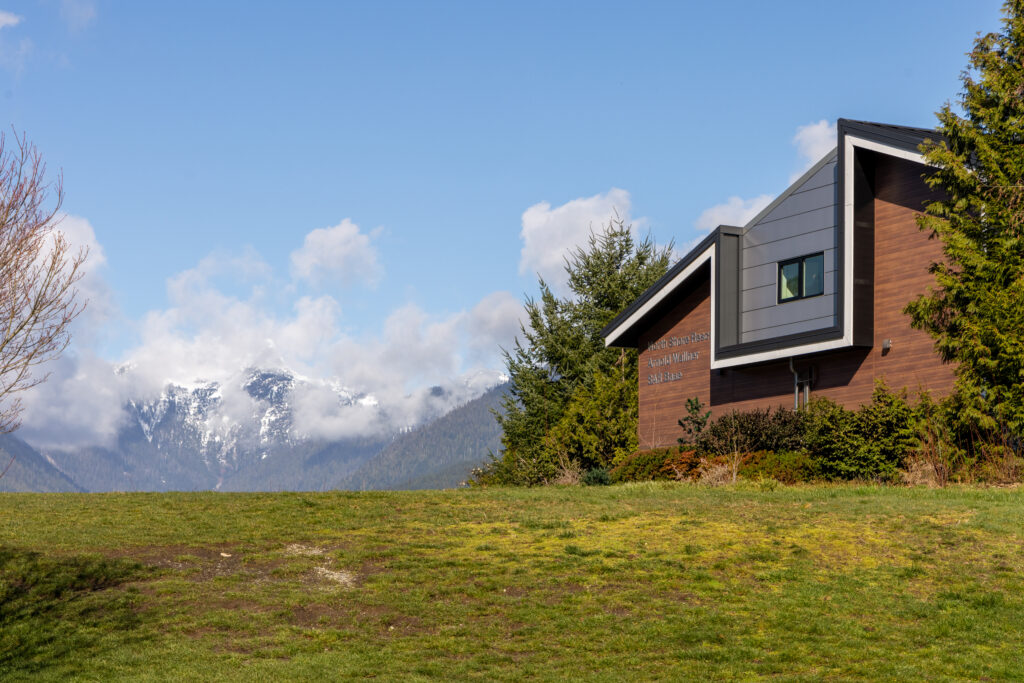
“Being in this environment on the mountain and being so exposed to the waterfront here, it’s important to use really durable materials.” The durability and longevity of the building was the most important consideration of the design, and the materials were meticulously chosen based on this. The location of it bears some of the most extreme elements of the Pacific Northwest.
The volunteers of North Shore Rescue were the ones to build this new facility, many of them have experience or own their own construction companies. “I hope it’s given a real sense of ownership, and hopefully they’re proud when they enter the building of what they’ve built here. The quality and the love that’s gone into the building is clear to see,” Nick exclaims.
The excitement that is felt throughout the team and especially with those who have been with the group for a long time, Allan reminisces on how far they’ve come, “The old bread truck that we had as a command center, I ran many searches out of there, there wasn’t even a chair to sit down inside it. This is luxury. I chuckle every time I come into this and think, ‘this is amazing what we have here.’ We are the envy of volunteer search teams in Canada I’m sure.”