There’s a reason aluminum siding has stood the test of time. Building trends come and go, the best exterior materials are ones that are the most reliable and are built to last and maintained to match. Aluminum is resistant to rot, pests, and fire, without requiring constant maintenance. Even so, no exterior material is entirely self-sufficient. A little routine care is what separates siding that looks as good in twenty years as it does today from siding that simply looks its age.
That care starts with the cleaning materials. Reactive or acidic cleaners, ones that contain Tri-Sodium Phosphate, Phosphoric Acid, Hydrochloric Acid, Hydrofluoric Acid, fluorides, chlorinated hydrocarbons, esters, or ketones etc., will degrade a coated aluminum finish far faster than weather exposure ever would. Strong solvents and thinners fall into the same category as they are too aggressive for the surface, and never appropriate for routine cleaning. Concentration matters just as much as the formula itself. Diluting to manufacturer specifications is highly recommended in order to prevent the finish from fading. And before anything touches a full surface, it should be tested on a small, inconspicuous area in order to check for reactions that could potentially compromise the effect of the finish.
Additionally, pressure washers carry a real risk, so a garden hose with a spray nozzle is essentially the ideal method of cleaning siding as it delivers a controlled, effective rinsing without the potential for finish damage. Scrubbing should be gentle and deliberate, because the coating on a Longboard product isn’t just cosmetic; it’s a protective layer doing meaningful structural work, and excessive abrasion shortens its service life. Gloves and safety goggles should be worn throughout, and overspray near windows and adjacent surfaces requires equal attention.
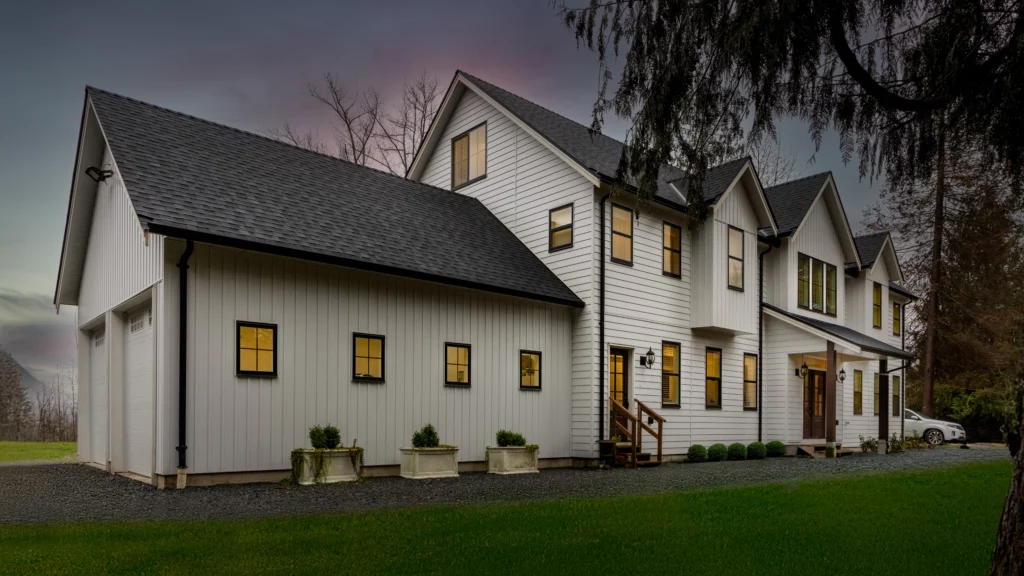
Maintenance begins the moment installation ends. Construction leaves behind dust, aluminum shavings, and airborne contaminants that, and if not cleaned promptly, it can cause permanent blemishes before the first winter arrives. Where heavier buildup is present, a soft sponge and a mild detergent with a pH between 5 and 9 handles it cleanly and safely. Start with a test patch, always.
For ongoing cleaning, the approach shifts slightly depending on what’s accumulated. Light soil usually rinses away with a hose and moderate water pressure, a soft sponge or brush with mild detergent if needed. Medium buildup calls for the same starting point, with a nylon cleaning pad to address areas that have had more time to set. For heavy soil, a mild solvent can be used carefully and briefly, prolonged contact risks degrading the protective coating, so it’s a precision step, not a routine one. In every case, the direction is the same: start at the top, work downward, and rinse thoroughly before letting the surface dry.